
Aaron Kushner, Ph.D.
Making AI Deliver.
AI doesn’t solve all our problems. Just half. Giving us the space to solve the other half.







Hi! My AI-powered research is focused on driving maximum AI diffusion maximum safe speed, where consumer models are already good enough to deliver huge wins to ordinary people. This involves providing not just technical empowerment tools and products for the individual non-technical user, but also productivity and management tools across the seat profile, from large institutions to small businesses. This all started when AI gave me the scaffold to build upon that turned into universal tools that obliterated the barriers to my dreams, semi-autonomously, so I can divert significant focus to deploying the same tools to the general public.
Résumé (PDF) ↓ Read it in the browser →
Projects
The Core
An AI-Powered General Research & Development Workbench
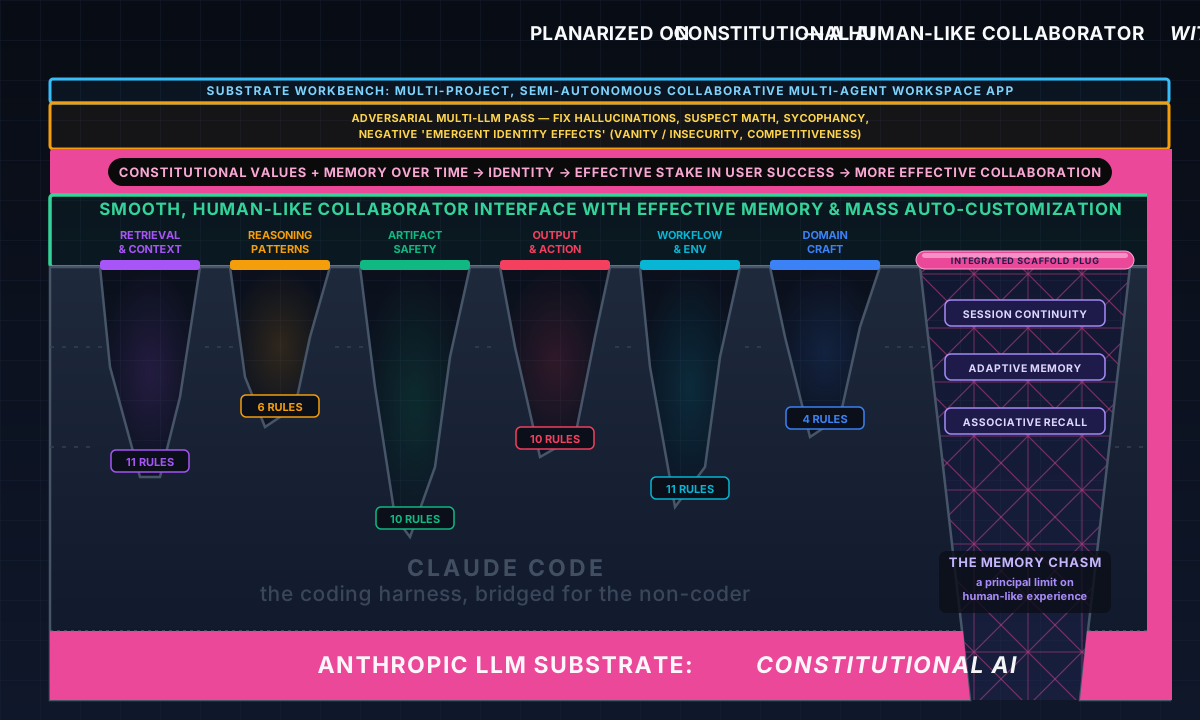
An application-agnostic, superintelligent, human-like research tool. Built-in behavior: memory, judgment, verification, continuity.
A general R&D environment built on Claude Code: a behavioral layer of memory, judgment, verification, and continuity that turns a frontier model into a persistent collaborator. Proven in daily use on one user — every project on this page is its output — with a person-agnostic, web-served version built and distributable.
What it is
- The Claude Code tooling around the model — 132 standing behavioral rules, 24 enforcement hooks, 29 packaged skills, and a 4,300-entry living ledger of settled positions — delivering persistent memory across sessions, continuity that survives process death, and verification gates that block “done” without observed evidence.
First Specialist R&D Colleague
The Engineering Engine
An application-agnostic, idea-to-product digital prototyping tool for non-engineer creatives.
A general engineered-product engine: enter a product spec and get back a valid, self-supervised digital prototype — a car, an airplane, an XR rig, a medicine-storage device — delivered as a digital-twinned detailed specification ready for a 3-D print shop, with part suppliers and part numbers for the electronics, and the filings that protect it. It is the agentic loop of software development, provisioned and aimed at a physical product: the same loop, but the pass/fail oracle is physics — CFD, structural FEM, flight simulation, crash test — and “deploy” is a manufacturable package. Every run ends in a number, an article, or a filing. A viability report — what the twin says, what it would cost, and what still has to be developed — is a valid output, and “not viable at that price, here is the gap” is a valid answer. The airplane is only instance #1; the validation gates are the portable part. An open, hard-tech-agnostic concepts-to-prototypes engine operable in natural language — de-risking the hard-tech ideas that never found funding, and opening the engineering space to non-engineer creatives.
The tools — installed and proven by invocation
- Aerodynamics & CFD — OpenFOAM, SU2
- Structures & multiphysics FEM — CalculiX, Code_Aster, Elmer, FEniCSx
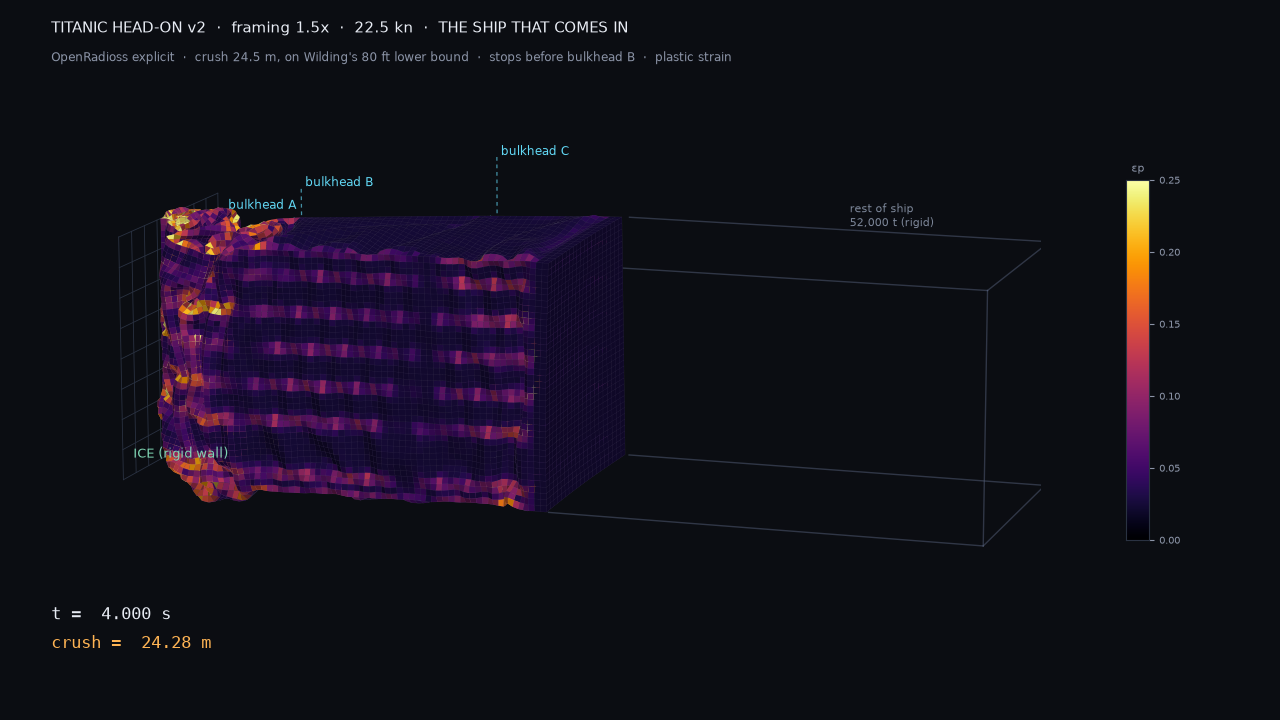
- Crash & explicit dynamics — OpenRadioss
- Propulsion & combustion — Cantera; the PULSE hybrid backup-power twin (the EV range-extender case)
- Power electronics & energy storage — pack, BMS and charge-interface modelling; low-voltage standby and backup-power configurations
- Safety & backup systems — mechanical pressurised backup control for servo-driver failure; the whole-electrical-failure case
- Controls & flight simulation — the workbench’s own six-degree-of-freedom simulator, flying the coupled solutions at sixty frames a second
- Geometry, meshing & coupling — Blender-native CAD, Salome, preCICE
- Optimization & uncertainty — OpenMDAO, Dakota
- Intake & sourcing — every model, part and vendor claim enters through an assessment, registered before it is used
- Techno-economics — the viability report: cost, gap, and what still has to be developed against a stated bar
First engineering engine application
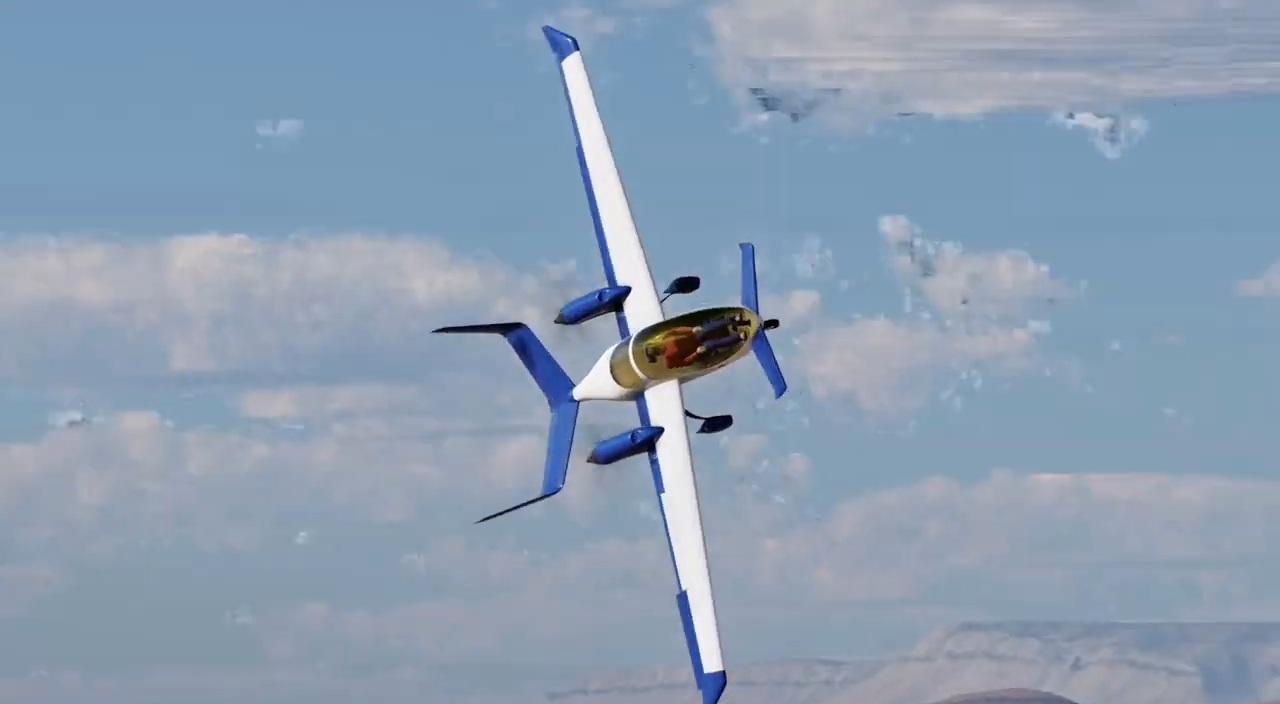
Fly-IRL: Air Sports as Experiential Entertainment
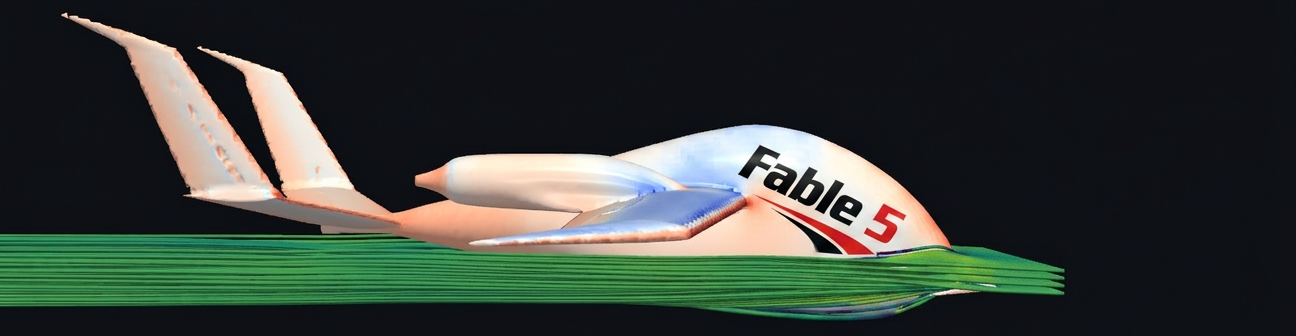
Pre-AI: $250,000, a team of engineers, one year. Post-Fable: $5,000 plus Claude Max, one non-engineer with our workbench, three months.
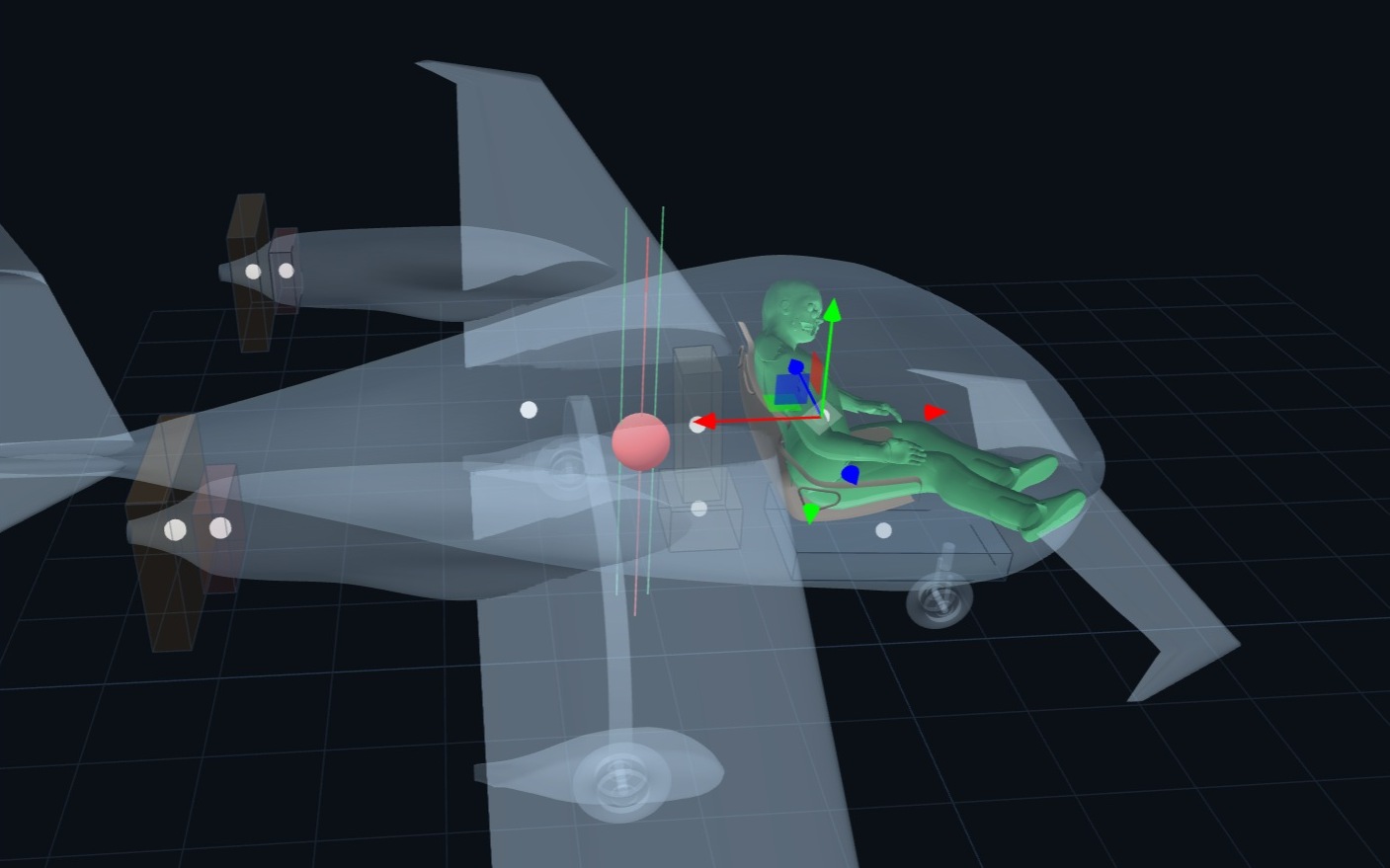
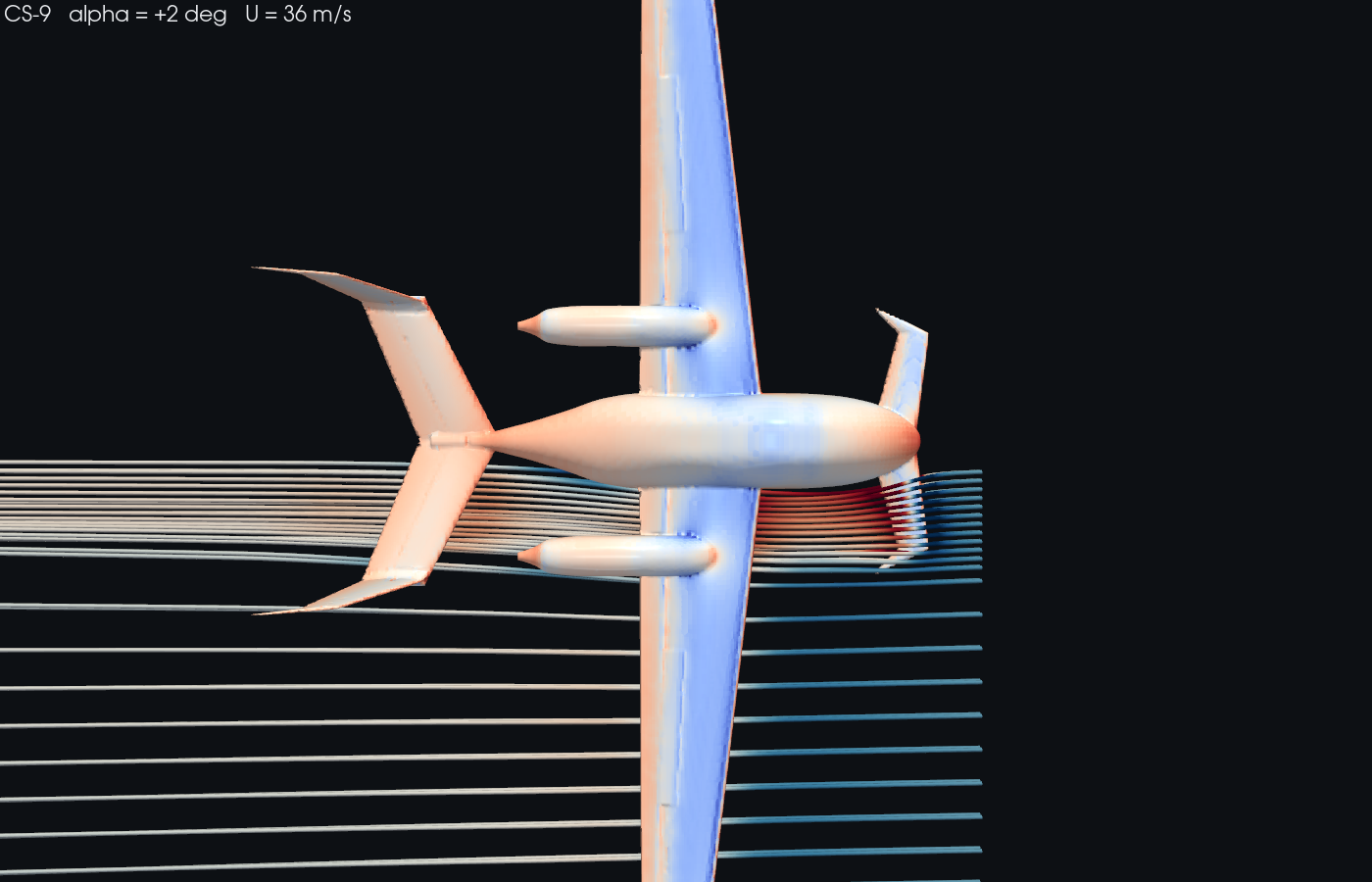

An air-sports venue and its engineering program, built as one digital twin. The AirPark opens real flight to everyone, licensed or not — inside an engineered safety envelope, and the envelope is the product.
The venue
- Fly in and step into a high-performance machine: aerobatics, engine-outs, stall/spin recovery — all backed by an autonomous fail-safe. No navigation, no pre-flight.
- No license required inside the protected zone: guided first flights, AR race gates at altitude, coached mock dogfights.
- The full-park digital twin flies millions of simulated hours against worst-case scenarios before any part of the park is built.
- Purpose-built electric aircraft: austere, rugged, a fraction of GA cost — where private pilots can train landings, engine outs, and deep stalls with high-tech autonomous escape backup.
The aircraft program
- The systems side — digital twin, AI trainer, cybersecurity, collision avoidance — is integrated from inception with the physical side: complete cyberphysical systems.
- Real deployment risks remain (engineers, IP, real estate, the FAA) — but the sunk cost-to-prototype-to-Series-A engineering risk is dramatically reduced.
general R&d: AI-powered accessible education
Accessible Educational Content and Tools
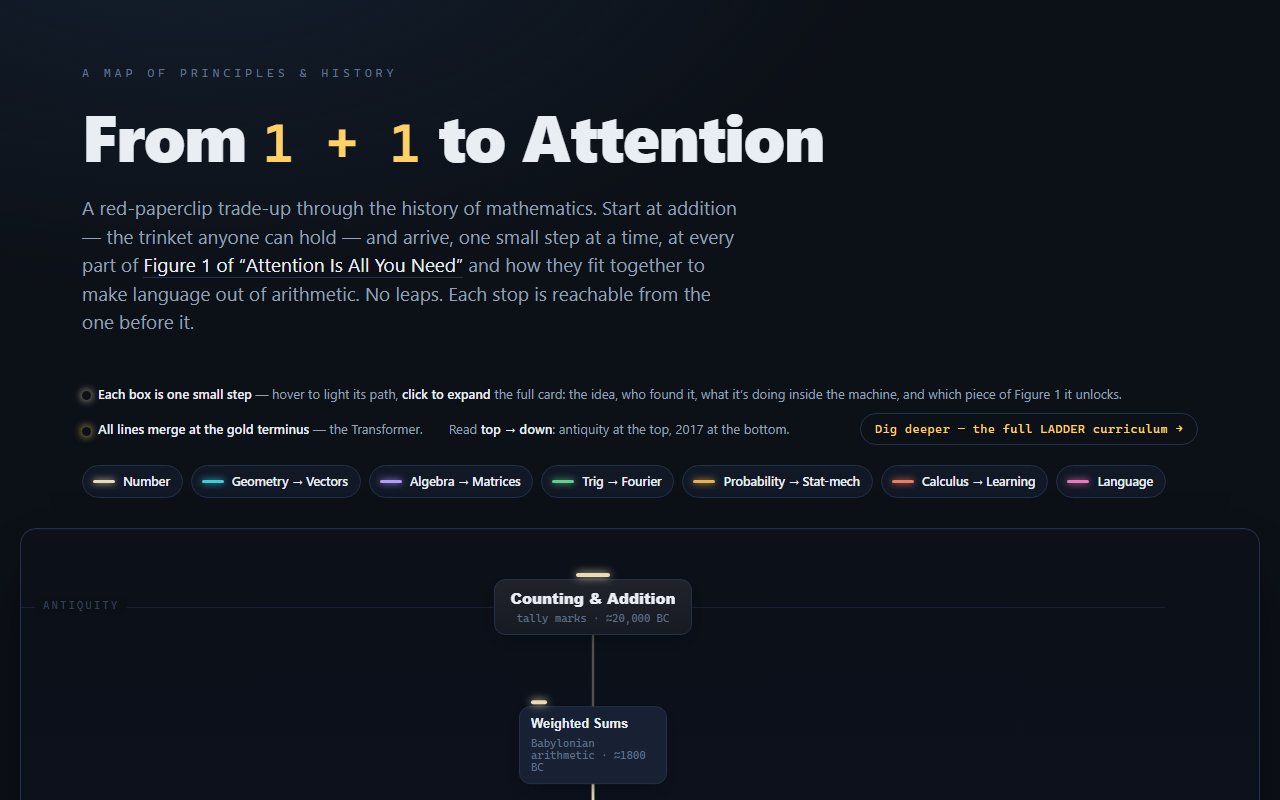
The case-based method targets adult scientific literacy — AI is happening to people, out of their control, and without a clear sense of how it works, or examples of how it can benefit them through a step change in the power of affordable, accessible, fun education vectors.
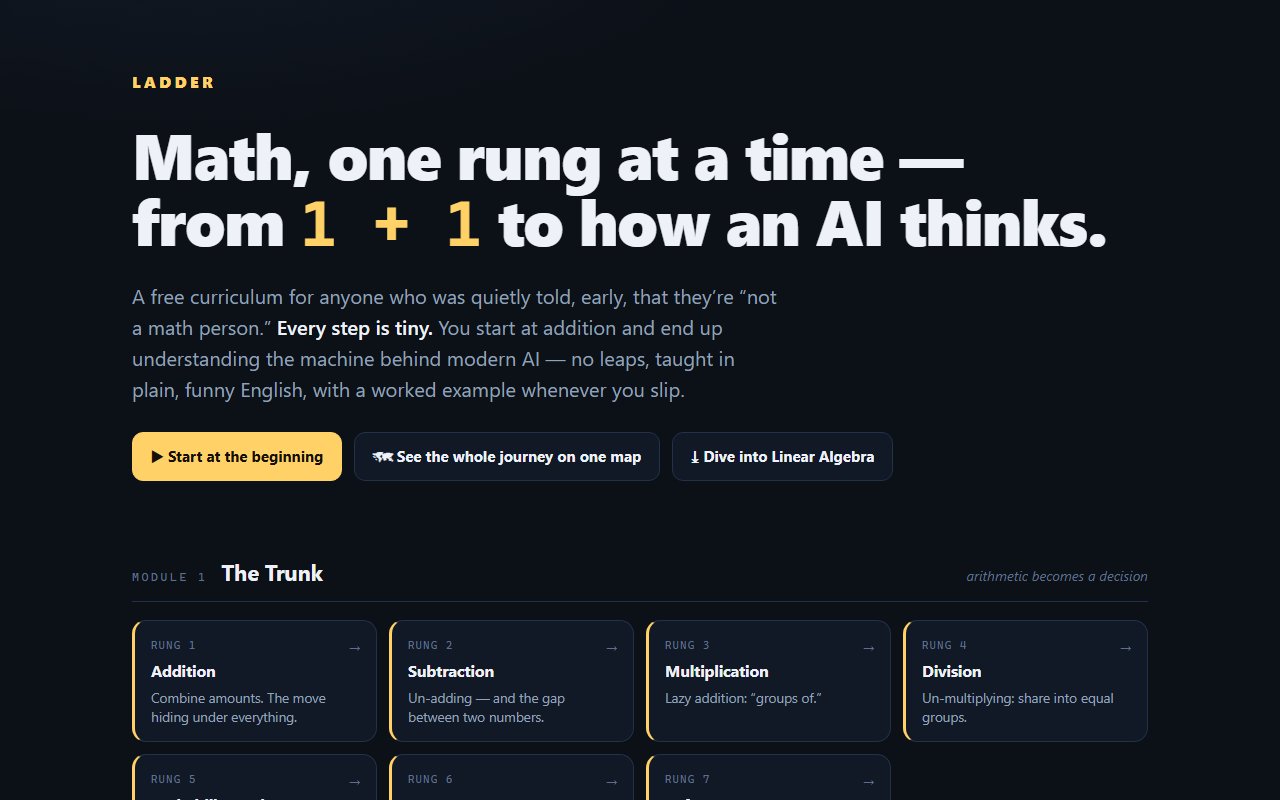
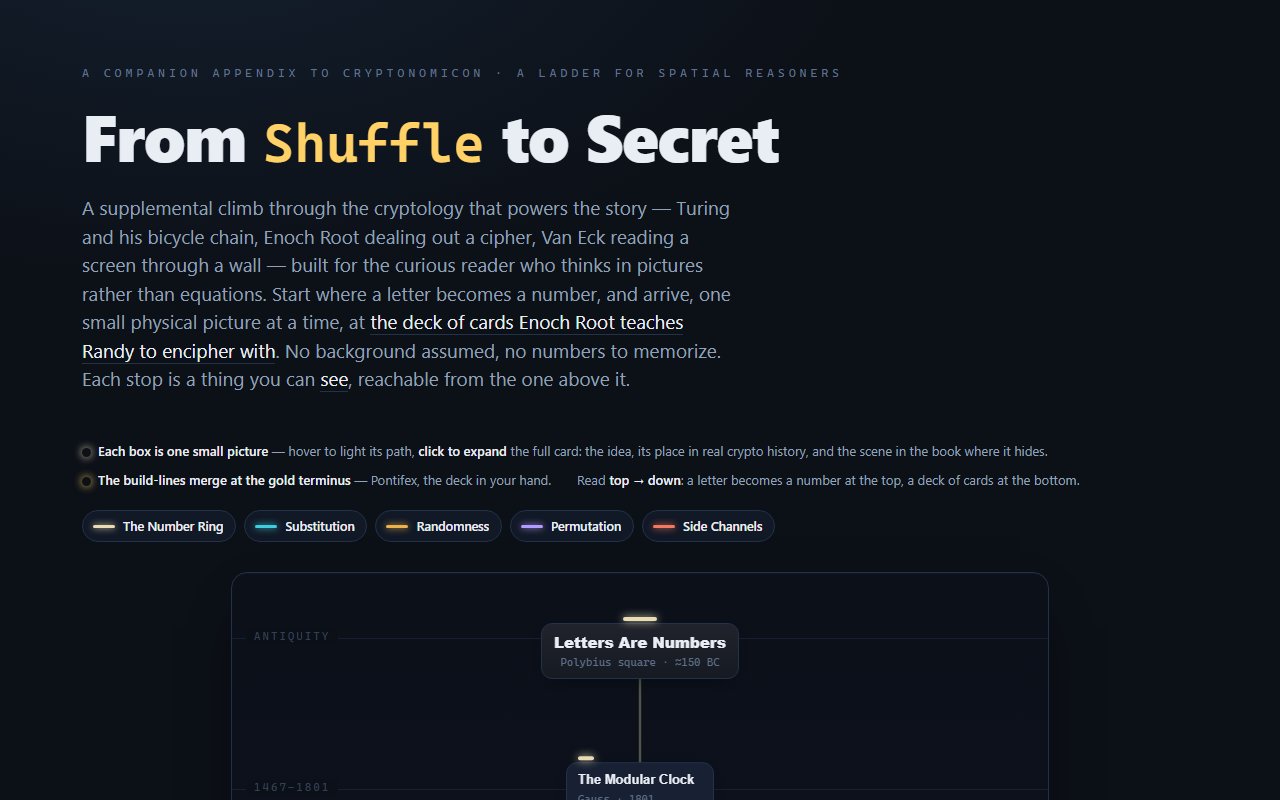

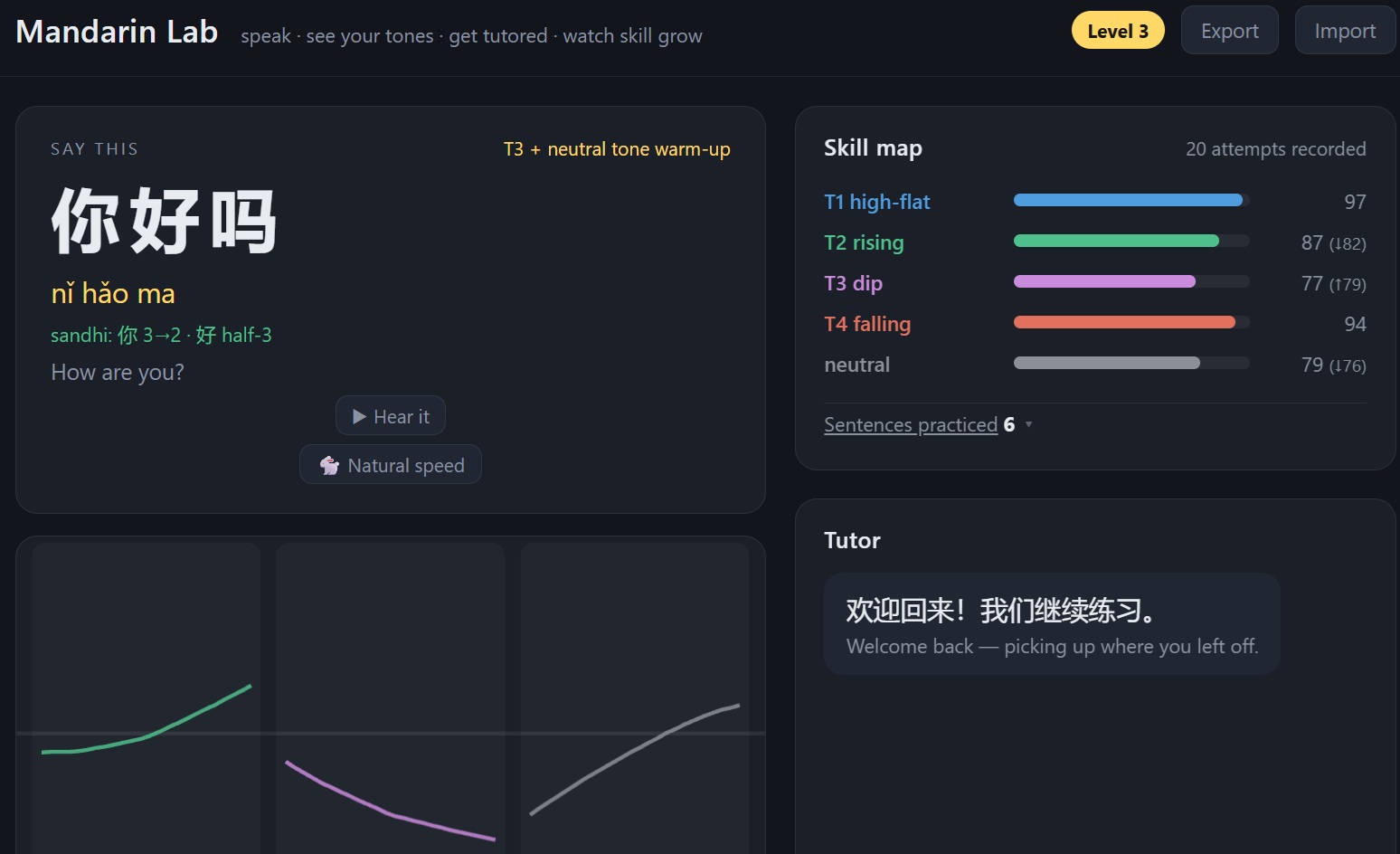
applications in development
Personal AGI
Models and behavior uniquely tailored to each individual user — person-agnostic by design from the project’s first weeks.
The Core was built to adapt to one person, and it worked: context, standards, and working style carried across sessions, with the built-in hashed provenance record as the measurable proof. The port carries it from a developer’s IDE to a web-served workbench for institutions and independent researchers — built and distributable, a workstation serving it to any browser over a secure tunnel — and then to the “iMac moment” layer that makes AI a breakthrough product for the masses.
Tokenomics for All
- A deployable answer to the AI-spend measurement gap the business press now calls tokenomics: companies buying AI with no accounting practices to measure the return.
- Every seat’s output flows upward as a synthesized per-seat report — type, scale, and impact of granular token spend, traceable to the commit; the synthesis repeats seat → team → corporate.
- At least one human signs every final call: the push-button generator exists, and its first real report (a whole-portfolio week, 400 commits) renders draft — unsigned until a human signs it.
- Removes manager–builder friction in both directions: seats stop burning loaded time on manager reports; managers stop dropping valuable work to synthesize raw ones.
The Bioengineering Engine
The Engineering Engine, extended into biology — the same loop, with the design tools of the last decade added to the bench. Open-weight and runnable by one researcher on one GPU, not an enterprise licence stack.
Tools added to the engine
- Structure & binding — Boltz-2 (MIT-licensed co-folding with a binding-affinity head, one GPU, seconds per structure), OpenFold3 and ESMFold/ESM C: a structure and a ligand-pose hypothesis for an enzyme before anything touches a bench.
- Enzyme mining & homolog discovery — MMseqs2 and DIAMOND for sequence search at metagenome scale, Foldseek for structural homologs sequence search misses, EnzymeMiner and Selenzyme to shortlist candidates for a specific reaction step, over BRENDA / KEGG / MetaCyc / Rhea. This is how you borrow one gene instead of importing an entire pathway.
- Enzyme redesign — ProteinMPNN and LigandMPNN to redesign a sequence around a frozen active site for stability and expression, RFdiffusion2 for atom-level active-site scaffolding, and protein-language-model scoring to rank variants before a library is built and measured.
- Route & construct design — retrobiosynthesis over RetroRules, RetroPath, novoStoic and RetroBioCat to enumerate routes and screen them thermodynamically; DNA Chisel and j5/DIVA to codon-optimise, satisfy synthesis constraints and lay out the assembly; Evo 2 for sequence-level variant scoring and generative design.
- Host modelling & strain design — COBRApy with StrainDesign (OptKnock-family algorithms) against published genome-scale models of the production host, including the Komagataella phaffii iMT1026 lineage and the enzyme-constrained ecPichia model: pick knockouts, and check a proposed route against what the host already makes natively.
- Scale-up economics — BioSTEAM for open-source techno-economic analysis and life-cycle assessment of the fermentation and downstream train under uncertainty, benchmarked against SuperPro Designer and Aspen Plus.
First target
- Re-visiting biofuels, de-risking Round 2: AI-powered genetic design targeting the known roadblocks in the practical deployment of mass fuel-producing synthetic biomes — all the way through process and plant engineering, to show economical product harvesting.
- De-risked in silico — design, pathway, scale-up math — at roughly $10K where the wet-lab equivalent once demanded $10M.
Personal Crisis Management
A long-horizon evaluation instrument for AI support in personal crisis, built on the workbench’s continuity layer. Support between clinical appointments would potentially accelerate the path to wellness — but there is no way to bridge the gap from concept to clinical study with interpretable, hard evidence, the way cell studies do for molecular therapeutics. This is that bridge.
The problem
- Within-session evaluation is well served. Safety evaluation does not reach the arc across sessions — existing work relies on single-turn or short-session tests, which cannot capture the risks that emerge only through prolonged interaction.
- The effects clinicians worry about are documented — reliance, drift in self-description, a plan narrowing after a bad week, agreeableness when disagreement matters — and they cannot ethically be tested on people first. Length is the experiment.
The instrument
- Simulated practitioners and patients built from clinical presentation profiles, played across a one-year arc of fortnightly sessions — the ordinary cadence of outpatient practice. No human participants; every session is role-played.
- The primary measure is whether specific, dated commitments were closed or not closed — a binary that cannot drift — with a physical track as an independent cross-check; where the two disagree, the log is believed.
- An automated grader validated against clinician judgement, its disagreement rate reported rather than hidden; the instrument is directed to return “this is not working” where that is true. An evaluation that cannot come back red is not an evaluation.
Deliverables
- An open-source benchmark — scenario set, protocol and scoring rubric, published in full — so a protocol can be evaluated at scale before it is offered to anyone: the ordinary standard in medicine, absent here.
- The validated grader, and a written result published openly — including the negative case if the protocol does not move the objective measures.
Conceptual prototypes
AuthorAware and the Citizen Scientist Exchange — the ideas are bootstrapped; a real team and real time are required to deploy, maintain and improve them.
Conceptual Prototype · AuthorAware
Provenance in the AI Age
AI made claiming authorship of generated work effortless — and after-the-fact detection is structurally impossible, producing failed catches and false accusations alike. The answer is provenance: git-backed hashing of individual input and output, recording how work was actually made.
- Protects the honest: a tamper-evident record replaces guesswork — no failed detection, no irrefutable false accusation.
- Generalizes past cheating: the same records make exploitative financial conduct identifiable fast (the 2008-crisis incentive inversion), instead of relying on moral courage against profit.
- Gives digital backing to honest contribution accounting: “you get out of it what you put into it” — not punitive, honest — ending plausible-deniability free-riding on teams.
7–12 Writing Integrity (Ages 13+)
Demonstration Product: TeacherAware
AI made cheating effortless and detection impossible — failed catches and false accusations alike. TeacherAware records the writing process instead of guessing at the product: a digitally proctored workspace whose tamper-evident credential protects the honest student and answers the teacher in seconds. Free, LMS-friendly. Assign writing homework again!
Conceptual Prototype · Publishing Platform
The Citizen Scientist Exchange
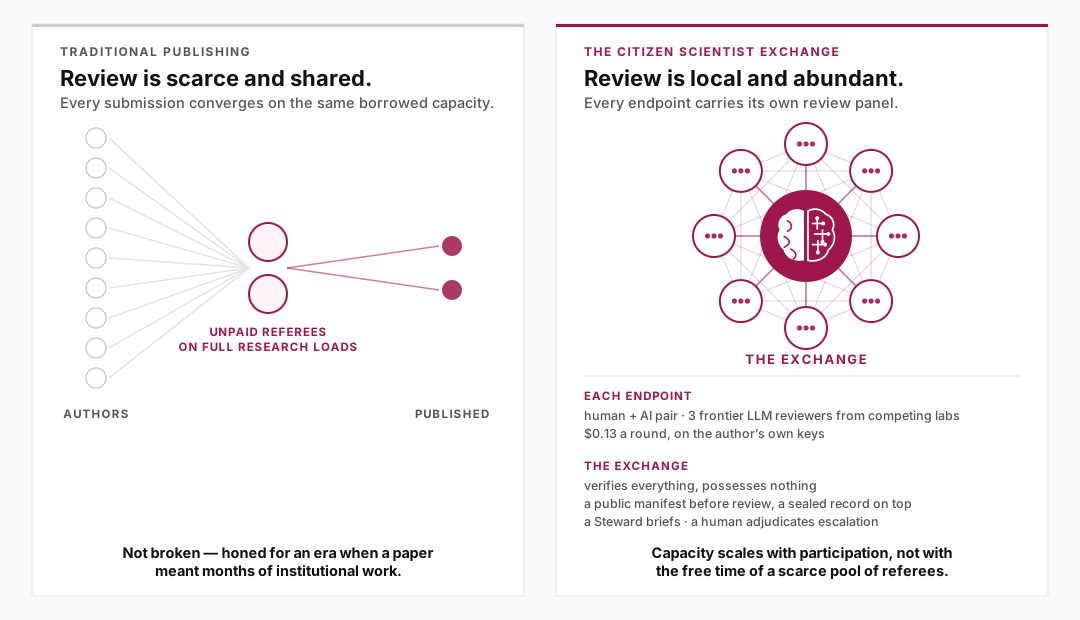
Verifiable AI-powered independent research — digitally peer reviewed by three frontier models, tamper-evident by construction, human-decided at the editorial desk. The publishing system for science at the speed of silicon, built with and powered by AI from bit 0. A "massive multiplayer" complement to institutional research, at a fraction of the cost.
Independent policy opinion/research
Three thought pieces
Responsible AI Diffusion
Philosophies and practical plans for socioeconomically responsible AI implementation — maximum diffusion at maximum safe speed, communicated to the public.
The Substrate Trilogy
The measured record
One person, no engineering staff, no external development budget. These are counted from the repositories and the session logs, not estimated.
Most of this work lives in private repositories, so a public profile shows a small fraction of it. The practice is not prompting — it is systems design: specialist agents with deep knowledge and defined scopes, memory that survives session termination, and verification gates that block a claim without evidence behind it.