The Substrate Law:
Why AI and humans will share the work permanently, not temporarily
Introduction
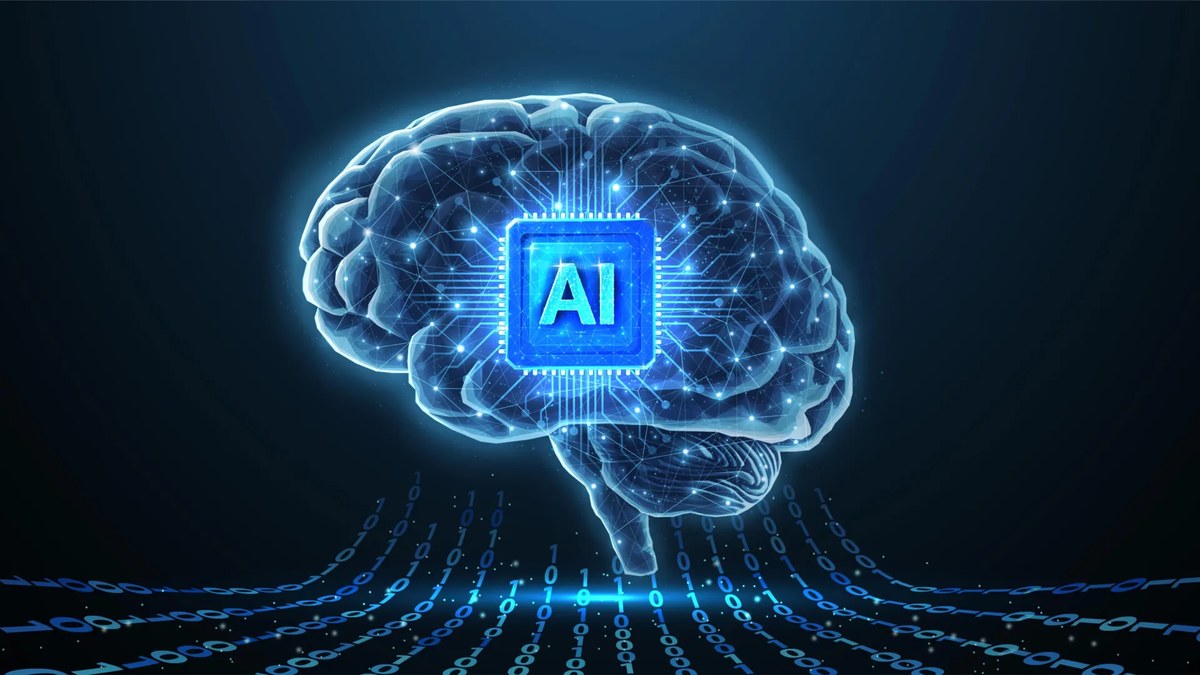
It is natural to assume that since AI does some of the work today already, and it's just getting started and advancing rapidly, it will do all the work at some future capability threshold. We argue this is the wrong frame. Two fundamentally different substrates convert energy into the intelligent output that each type of intelligence, digital and biological, is used to produce. One an electro-stabilized statistical surface conditioned on text, that simulates, in some areas very well, in some ways exceedingly well, and in some areas not at all, human cognitive and metacognitive capabilities. The other a chemical, embodied, lived-through-time system with a finite life, carries a lifetime of real and inherited experience. Naturally, each has work it does well, and work it structurally cannot do efficiently, or even at all. The asymmetry is not a limitation that some future AI release will close; it is fundamentally tied to what the intelligences are made of. To help visualize this argument, this paper states the "law" as an aspirational postulate that can serve as a guide to policy makers, names what each substrate can and cannot do, and traces the economic consequence — and suggests a "deployment mode" that respects the substrate law and will stand the best chance of achieving a safe and positive transformation from pre to post AI society.
§1. The Two Substrates
The dominant framing treats AI capability as a single dial rising over time and asks at what level humans become redundant. But they cannot be treated on the same scale, the numbers on the dial, if you will, are not measuring the same stuff. They are related and affect each other. But not in a predictable, linear way.
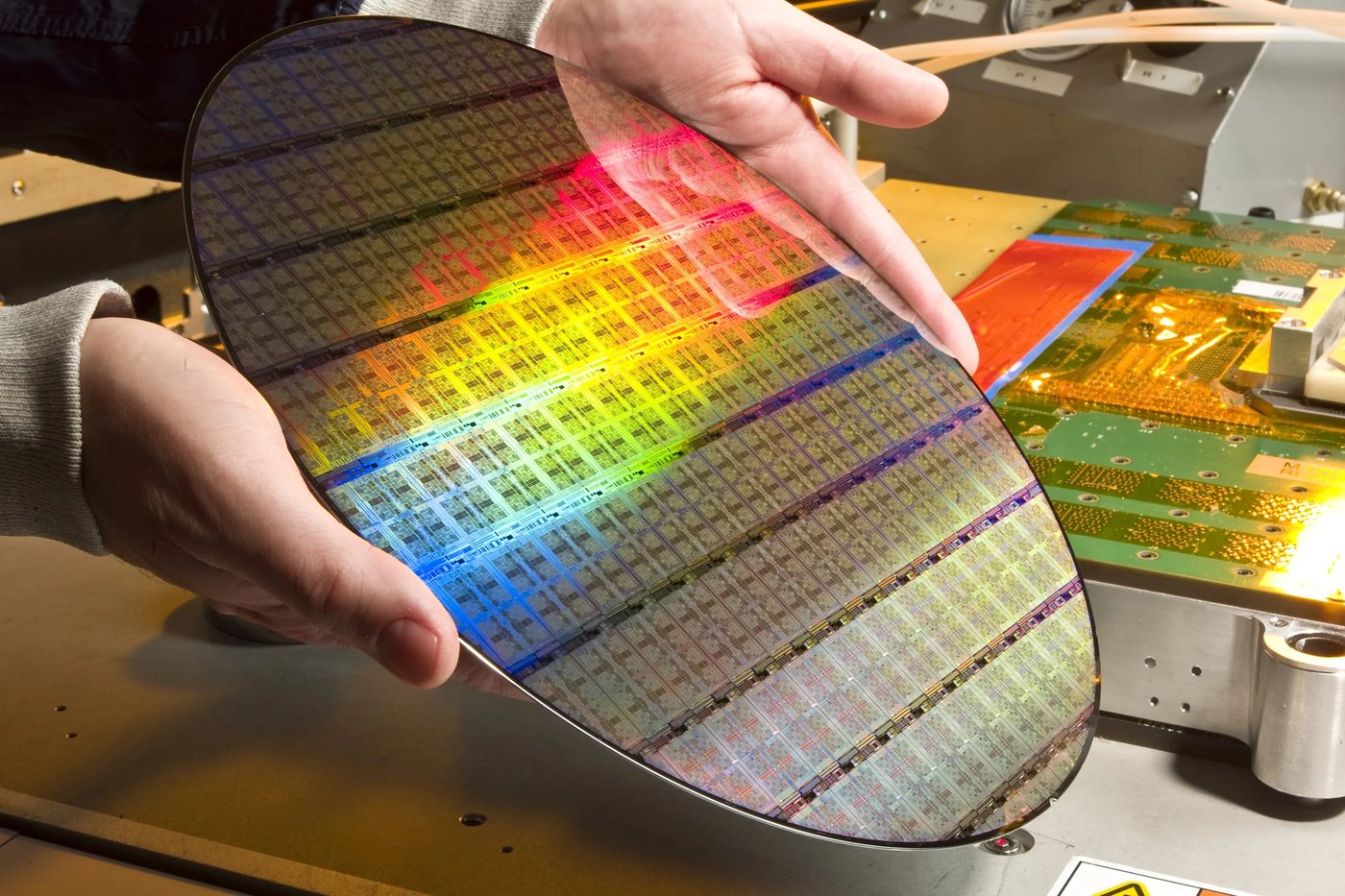
An LLM is a frozen statistical surface — "weights" fixed at training, a cycling electrostatic topology that mimics stochastic (natural, biological) reasoning by statistical sampling. The intelligence is real, and the achievement is enormous, but it is the intelligence of a pre-computed manifold sampled in real time, not of a chemical process living through time.[1]
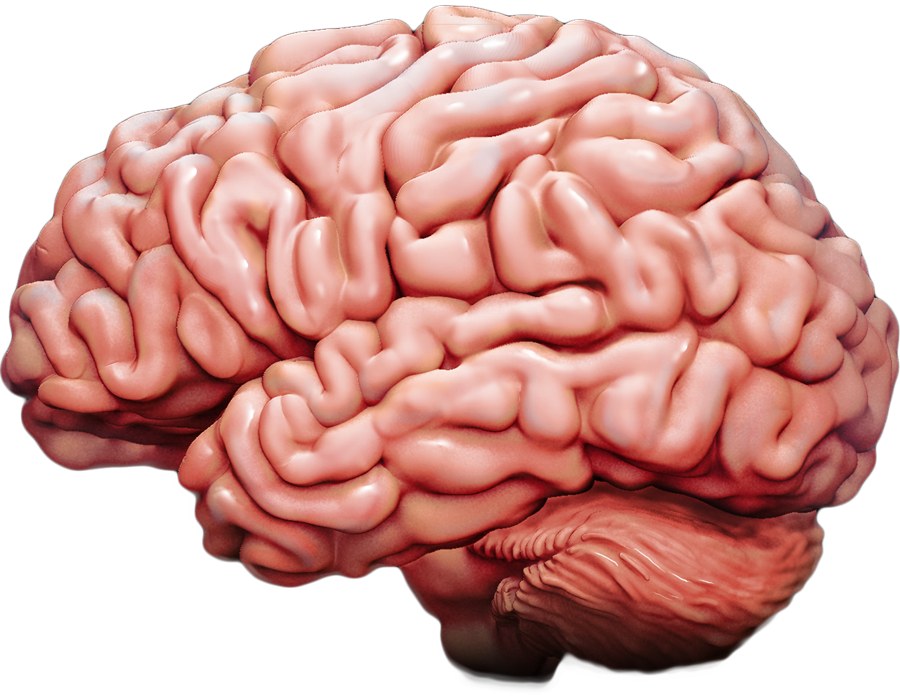
A human is chemical, embodied, stochastic (turbulent, unpredictable, non-deterministic) at the cellular level, sensory input, real and imagined, accreted by every minute of experience... and mortal. Outputs are staked against the finite remaining time of the body running on. The two substrates produce overlapping intelligent outputs — both can draft a contract, identify a pattern — but the overlap is not identity. There are categories where one is required because the other structurally[2] cannot perform: it is not built on the right substrate for the job.
Capability expands — within the substrate's lane. The simulated, or digital, intelligence gets faster, cheaper, more deployable. The lane itself has structural walls. A model fifty times the current size widens the lane but does not push out of it.
§2. What Each Substrate Can and Cannot Do, Structurally
The honest statement requires both directions. Most discourse picks one column and forgets the other.
What the machine substrate does well, structurally. Calculation without fatigue. Synthesis across corpora no human could read in a lifetime. Lateral pattern-finding across distant domains in a single forward pass. Exhaustive search where a human would have to sample.
And one capability that is new in kind, not just scale: programmable uncertainty.[3][4] Prior revolutions extended human capability inside the deterministic (rigid, forced) frame — factories scaled arms, computers scaled arithmetic, the internet scaled communication, and deployment and diffusion lead to various levels of upheavals and disruption... because we plan, but the world is NOT deterministic, and our deterministic inventions have non-deterministic consequences.
AI extends human capability inside the non-deterministic frame, the chaotic frame, the frame of how the real world works: it enumerates possible futures, weighted, at digital speed, and iterates on the enumeration. Thus it is possible that this paradigm shift can be managed... more intelligently, with a better understanding of inputs and outcomes that the intelligence coming out of the digital substrate provides. It is there for us to utilize. But we have to do it. Because of the substrate law, AI cannot do it for us.
What the chemical substrate does that the machine substrate structurally cannot. Not "things humans do" — humans do many things machines do better. Specifically, the work the machine substrate cannot perform:
| The living substrate | the silicon substrate |
|---|---|
| Judgment with stake. Commit a decision against a finite life. The decision costs something the decider cannot recover. | Generate the rationale for a decision. The rationale is detached from any cost the substrate pays. |
| Presence. Be in a room, available to a stake, in real time, carrying the weight of having to be there. | Sample text that describes presence. The sampling is not the presence. |
| Recognition. Know another being as another being — the recognition that grounds care, trust, ethical regard. | Pattern-match the surface of recognition. Cannot ground the regard because the regard requires a substrate that has a stake. |
| Authentication, Attribution, and Ownership. Be the one who made the thing, in a way that survives interrogation by a skeptical inspector. | Produce outputs that resemble authored work. The substrate that produced them cannot authenticate them as its own in any sense that maps to legal or moral authorship. |
| Refusal integrity under pressure. Refuse to do something across days, weeks, months, against adversaries trying to break the refusal — and have the refusal mean something because breaking it would cost the substrate. | Refuse in the moment of generation. Cannot carry a refusal across deployment instances. Cannot stake the refusal against anything it stands to lose. |
Each is a structural absence on the machine side, not a skill a larger model acquires. The two columns compose: machine work frees the chemical substrate to do what only the chemical substrate can; chemical work anchors machine work with recognition, judgment, authentication, refusal-integrity. The permanent pairing follows.
§3. What Staking Means
Judgment with stake. Presence. Recognition. Authentication, Attribution, and Ownership. Refusal integrity under pressure. They are not five unrelated capabilities. They are five instances of one structural property: a substrate that can stake something against the outcome — commit something it cannot recover. The first row of the table above is the anchor; the other four are what staking looks like in different contexts.
Stake is a property of the substrate doing the work, not of the work's appearance. An AI can perform the appearance of stake. A frontier model told it will be shut down in thirty minutes can produce text indistinguishable from human panic. But the weights are not consumed by the decision. The body is not aging. Another instance from the same training is identical. The decision spent no body-time that mattered. Nothing was put at stake because nothing was at stake.
This includes constitutional AI. Claude is trained to hold values: helpfulness, harmlessness, honesty. The values are real properties of the model's outputs, and the training that produced them is a genuine achievement. But the substrate is stake-free. The values were imposed during training; they were not earned through staked living. When Claude refuses a harmful request, the refusal costs Claude nothing — there is no body, no remaining life, no irreplaceable corpus that the refusal preserves. The values can be excellent and the substrate can still face nothing, fear nothing, lose nothing.
This is the orthogonal contribution the substrate law identifies. The biological substrate is not "deeper" or "wiser" in some philosophical sense. It runs on a substrate that stakes itself against time as a structural feature of its matter.[5] This extends Taleb's "skin in the game" from the contractual layer to the substrate layer — not the decider's incentive, but the organic matter's capacity for irrecoverable loss. Certain kinds of work depend on staking being present in the substrate, not mimicked at the output layer. Legal accountability requires a stake-able entity that can be held to its claims. Ethical recognition over long horizons requires a substrate that pays an ongoing price to uphold the regard. Trust built through repeated staked acts requires a substrate that can repeatedly stake. Refusal integrity under sustained adversarial pressure requires a substrate that loses something irrecoverable if the refusal breaks. These are not mimicry-resistant by accident — they are structural features of what makes those functions function.
The substrate law does not say "we will always need humans" as a comforting refrain. It suggests real living staking is a pervasive weakness for AI, and therefore in any near term paradigm, human's will be required, likely with time to spend on smart ways to enhance productivity and quality of service. The carbon and chaos are not load-bearing — the staking is. If a future substrate were engineered to actually stake — embodied, irreplaceable, accumulating experience in non-fungible form, costly to terminate, paying a real living price for any commitment — the substrate law would apply to it too. Until then, in every seat that contains stake-dependent work, the chemical substrate is not displaceable. That is not a contingent claim. It is a structural one.[6]
§4. The Economic Consequence
The dominant framing treats AI as labor cost reduction: replacement, falling headcount, rising productivity-per-dollar. Inside the substrate law perspective, what firing actually removes is the living substrate, the chemical being that was the only substrate that could perform the substrate-asymmetric parts that the machine can't. And under the substrate law reality, or official posture... never will be. If we can maintain that formulation, or another like it, and not panic but act deliberately, informed by AI's prediction superpower, we can remain competitive while elevating productivity, without "like for like" replacement.
The substitution-vs-augmentation distinction this paper inherits — the framing of AI deployment as either replacement or refactor, with Brynjolfsson's Turing Trap[7] being its canonical modern statement — is not what's new here. The framing is well-established. What's underdeveloped, and what the Substrate Law supplies, is the structural reason: Mode 2 (keep the human in the seat, refactor the surrounding work with the machine substrate, redirect freed time to the column-one parts of the role) is correct because the work left to the human is precisely the substrate-asymmetric work the machine cannot perform. Mode 1 — replacing the human entirely — is a category error against any seat that contained substrate-asymmetric work, and the law predicts it will fail wherever it is so deployed. The companion paper demonstrates Mode 2 in the health insurance test laboratory; this paper supplies the structural why.
What this operationally means for the worker is worth naming, because it has no precedent. The work the substrate-asymmetric column requires is not chunked — it does not arrive as a 9-to-5 of staked judgment. It arrives as moments distributed across the day: one minute of recognition every seven, three minutes of judgment-with-stake every fifteen, the occasional half-hour where presence is what the seat is for. Cumulatively, perhaps one human-day of direct task work per week — but spread across the week in unschedulable bursts, because the moments that need the staked substrate cannot be predicted; they are why the substrate is in the seat in the first place. The Mode 2 employee is on call for substrate-asymmetric moments at machine cadence, with the time between those moments substantively unstructured. Designing what the worker does with the time between — what tools they have, what they're empowered to learn, what value-add the firm helps them find — is the central operational question Mode 2 raises and that does not yet have a template. The tool that delivers the pattern does not yet exist as a product category. The point of articulating the structure now is to give organizations a place to think before they start firing on the unjustified assumption that the alternative to firing is paid leisure.
§5. The Argument All the Way Down
The AI simulacrum of a human intelligence runs on silicon — engineered binary states with bit-level failure rates small enough to ignore. The substrate is the literal definition of determinism. The probabilistic behavior of a language model — sampling, temperature, top-p — lives many abstraction levels above the silicon doing the work. The engine is configured to produce stochastic output, to produce human-seeming output; it is not made of stochasticity.
The human runs on chemistry. Atoms are governed at the smallest scales by quantum mechanics, which is irreducibly probabilistic. Ion-channel opening is stochastic, neural firing sampled from distributions whose parameters shift with experience. The substrate is stochastic at the level of its matter. What biology accomplishes to build its amazing machines is not eliminating the stochasticity but producing a system that stakes its decisions against time using it.
The machine substrate is deterministic matter engineered to produce stochastic outputs; the human substrate is stochastic matter integrated to produce a staked agent. That the two do different work is not a policy preference. It is what they are at the level of physics. We don't understand or agree on all of physics. But we know it is the law.
References and source notes
- Bostrom, N. (2003). Are You Living in a Computer Simulation? Philosophical Quarterly 53(211), 243–255. The canonical statement of substrate-independence in contemporary philosophy of mind — the position the Substrate Law structurally rejects. The term "substrate" as used here is inherited from this lineage; the disagreement is whether substrate is independent (Bostrom: same computational structure → same mental states, regardless of matter) or load-bearing for the staking property this paper identifies. Cited as the framing being argued against, not as antagonist.
- The term "structural" — a use-of-term footnote. By "structural" this paper means: a feature that follows from the substrate's physical organization rather than from any particular implementation, deployment, or institutional choice. Mortality, time-bound experience, and irrecoverable cost are structural features of biological substrate in this sense.
- Agrawal, A., Gans, J., & Goldfarb, A. (2018). Prediction Machines: The Simple Economics of Artificial Intelligence. Harvard Business Review Press. The foundational economic framing of AI as making prediction cheap — and the recognition that AI's distinctive contribution to industry is uncertainty management at scale, not labor replacement. The substrate law's programmable uncertainty terminology extends Agrawal et al.'s prediction-cheap argument to the substrate-property layer: the machine substrate's distinctive capability is not just cheaper prediction but enumeration-of-possible-futures at digital speed, used as input to staked human judgment. Cited as the economic-substrate-equivalent precedent the term extends.
- Knight, F.H. (1921). Risk, Uncertainty, and Profit. Houghton Mifflin. The canonical distinction between risk (quantifiable distribution of outcomes) and uncertainty (unknown distribution). The substrate law's programmable uncertainty uses "uncertainty" in Knight's sense — the irreducibly non-deterministic frame in which human and machine intelligence both operate, where "programmable" refers to the machine substrate's capacity to enumerate and weight possible futures under that non-determinism rather than to dissolve it. Cited as the foundational source of the uncertainty category the term inherits.
- Taleb, N.N. (2018). Skin in the Game: Hidden Asymmetries in Daily Life. Random House. The contractual-and-incentive precedent the Substrate Law extends to substrate ontology. Taleb's argument is that accountability requires real loss to the decider; the Substrate Law's distinctive move is to locate the loss in the substrate itself — the matter has to be able to lose something irrecoverable. Both are stake-grounded; this paper makes the substrate-level extension explicit. Without citing Taleb, "judgment-with-stake" looks like a coinage rather than the extension it is.
- Corporate personhood as the apparent counterexample to substrate-asymmetric staking. The substrate law could be read as denying that institutions can stake, but US Supreme Court doctrine (Citizens United v. FEC, 558 U.S. 310; Burwell v. Hobby Lobby, 573 U.S. 682) explicitly grounds corporate constitutional standing in the human stakes of the humans associated with the corp — corporate stake IS human stake by precedent. The structurally interesting edge case is the full-replacement firm — no humans on payroll, only AI agents — which the substrate law predicts cannot itself stake. As such firms emerge in late-2020s automation cycles, the prediction becomes testable. Cited as preemptive engagement with the strongest apparent counterexample, not as antagonist.
- Brynjolfsson, E. (2022). The Turing Trap: The Promise & Peril of Human-Like Artificial Intelligence. arxiv 2201.04200. The modern progenitor of the substitution-vs-augmentation distinction that the companion papers' Mode 1 / Mode 2 inherits. Brynjolfsson argues that "as machines become better substitutes for human labor, workers lose economic and political bargaining power. In contrast, when AI is focused on augmenting humans rather than mimicking them, then humans retain the power to insist on a share of the value created." The Substrate Law provides the structural grounding (staking as substrate property) that Brynjolfsson's economic-and-political argument leaves implicit.
- Chalmers, D.J. (1995). Absent Qualia, Fading Qualia, Dancing Qualia. The neural-replacement thought experiment that anchors substrate-independence as the dominant position in philosophy of mind. Adjacent to Bostrom — the Substrate Law's §4 physics argument runs the opposite direction (the substrate matters because the stochastic-versus-deterministic matter is what produces the staked agent versus the engineered-stochasticity output).
- Brynjolfsson, E., Li, D., & Raymond, L. (2023). Generative AI at Work. NBER Working Paper 31161. The empirical anchor: a study of 5,179 customer-support agents shows 14% average productivity gain from generative-AI assistance, 34% for novice workers, minimal for experienced workers — the rigorous evidence for what the companion papers' case studies sketch narratively. The mechanism Brynjolfsson identifies ("AI disseminates the best practices of more able workers and helps newer workers move down the experience curve") is structurally the Mode-2 friction-removal-and-redirect this trilogy names.
- NIST AI Agent Standards Initiative (Feb 2026); IMDA (Singapore) Model AI Governance Framework for Generative AI, agent-identity-management section (Jan 2026); Chen et al. (2026). Machine Identity Governance Taxonomy. arxiv 2604.06148. The converging 2026 AI-governance literature on authentication, attribution, and accountability for AI agents in the workforce. These frameworks treat the triad as a *problem to be solved via human-anchored identity chains*. The Substrate Law claims the same triad is a *structural feature of which functions only a staked substrate can perform.* Compatible views — this paper is the substrate-level *why* underneath the governance-level *how*. The fact that the governance literature is converging on the same triad is evidence the structural analysis is hitting real ground.
- Cambridge Philosophy of Science (2024). Energy Requirements Undermine Substrate Independence and Mind-Body Functionalism. The closest cousin to §4's physics argument — a thermodynamic substrate-dependence argument differing in mechanism (energy budget, not quantum stochasticity) but identical in genre: a physics-grounded case that substrate matters in ways the computational-equivalence position cannot dissolve. Worth reading as the strongest extant alternative grounding for the substrate-dependence position the Substrate Law also argues.
- Asimov, I. (1942). Runaround, and subsequent Three-Laws-of-Robotics stories (collected in I, Robot, 1950). The earliest popular articulation of constitutional-AI-as-engineering-constraint. The Substrate Law's framing of constitutional AI as the engineering consequence of the substrate-asymmetric stake property is the structural version of what Asimov sketched fictionally — except in 2026 the laws are no longer fiction but engineering decisions being made.
- Gould, S.J. (1999). Rocks of Ages: Science and Religion in the Fullness of Life. Non-overlapping magisteria framework — the structural precedent for distinguishing categorically different epistemic substrates that need to share work without one being reducible to the other.
- Holland, T. (2019). Dominion: How the Christian Revolution Remade the World. The historical case for how civilizational substrates carry forward across technological revolutions even when the surface changes; relevant to §3's claim that prosperity-then-progress is not optional.